
Key takeaways
- Remove your shoes when entering homes and any place where signs, shoe racks, or a raised floor indicate that you should.
- Keep conversations quiet on public transport and make phone calls after you get off.
- Let passengers leave a train before you board, then follow the marked queue.
- Tipping is not normally expected in restaurants, taxis, or hotels.
- Carry a small bag for trash because public bins can be difficult to find.
- At an onsen or sento, wash and rinse your body before entering the bath.
When you travel around Japan, you may occasionally wonder, “Why does everyone do that?”
People remove their shoes before entering a home. Trains can stay surprisingly quiet even when they are crowded. Streets remain clean despite the limited number of public trash cans.
These habits feel so ordinary to many people who grew up in Japan that we rarely stop to think about them. I live in Japan, and it is often only after learning how things work elsewhere that I realize a familiar habit is not universal.
Here are eight everyday customs you are likely to notice during a trip to Japan. This is not simply a list of rules. I will also explain why people follow them and what you can do as a visitor.
1. People take off their shoes before entering a home
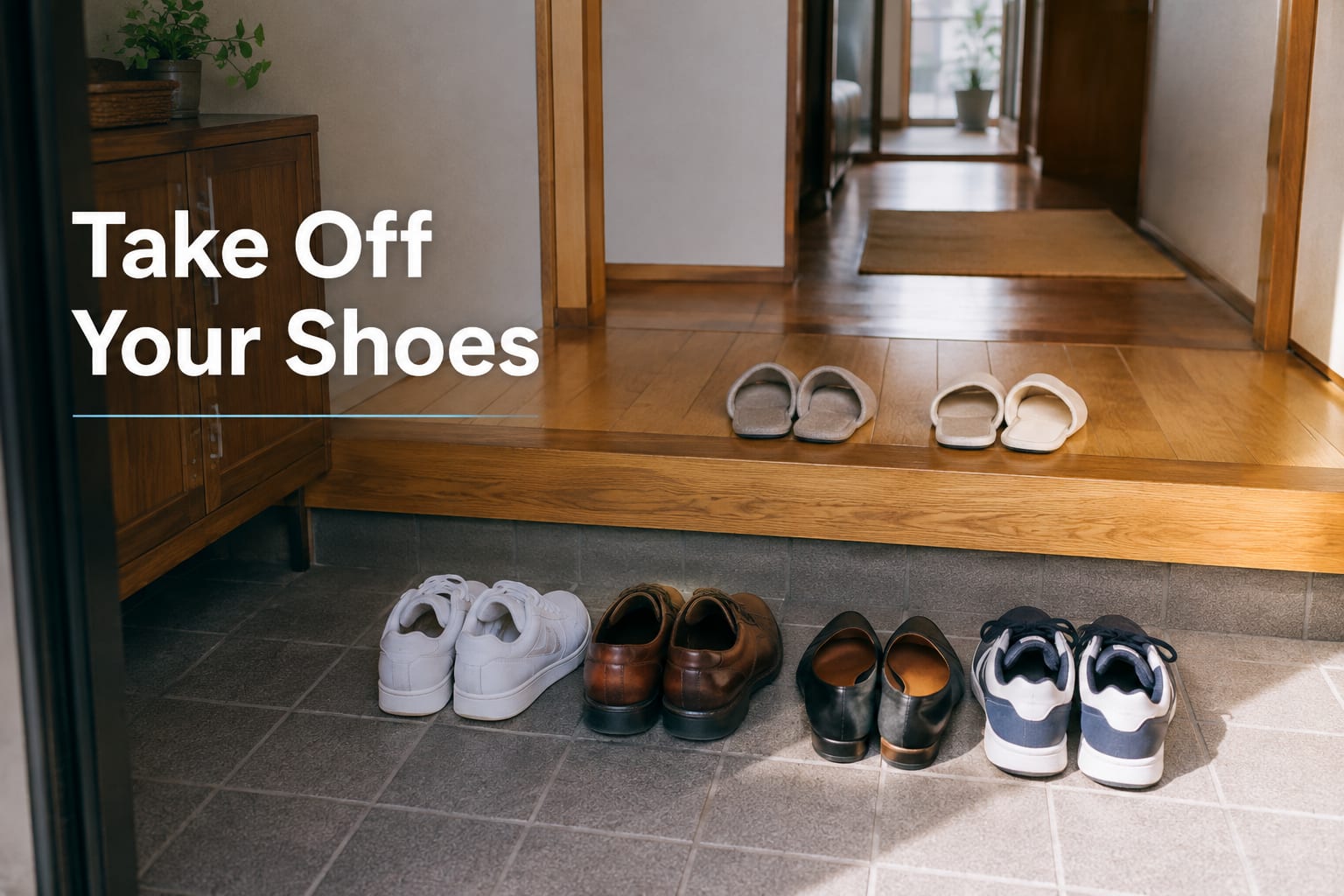
In a Japanese home, you normally remove your shoes in the entrance area before stepping inside.
Many homes have a small change in floor level between the entrance, called the genkan, and the main living area. That boundary shows where outdoor shoes should come off. For many Japanese people, walking through the home in outdoor shoes feels just as strange as removing them may feel to a visitor.
Homes are not the only places where this custom applies. You may also be asked to take off your shoes at a ryokan, temple, traditional restaurant, onsen, or another facility. In a tatami room, you normally remove your slippers as well.
If you are unsure, look for:
- A shoe rack or rows of shoes near the entrance
- A step between the entrance and the indoor floor
- Slippers provided for guests
- A sign asking you to remove your shoes
- What the people ahead of you are doing
2. People tend to keep quiet on trains
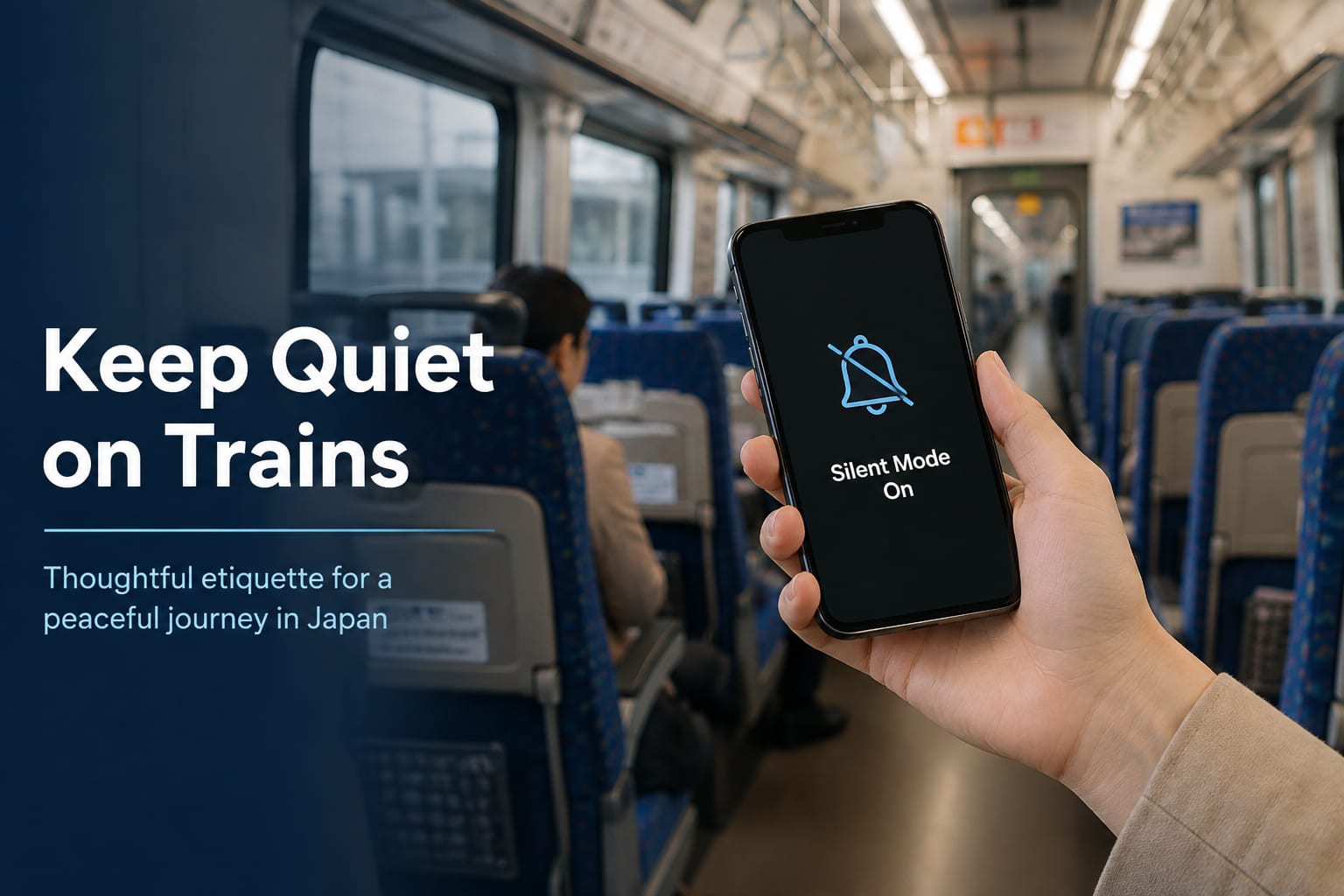
Board a train in Tokyo or Osaka and you may be surprised by how quiet it is, even when the carriage is full.
Talking with your travel companions is not forbidden. People simply tend to avoid loud conversations, and speaking on the phone inside a train or bus is generally frowned upon. JNTO also advises passengers to speak softly and avoid phone calls on public transport.
The idea is to be considerate in a space shared by many people. As a traveler, you do not need to worry about remaining completely silent. Keep your voice at roughly the same level as the people around you, and wait until you get off if you need to make a call.
3. People form orderly lines
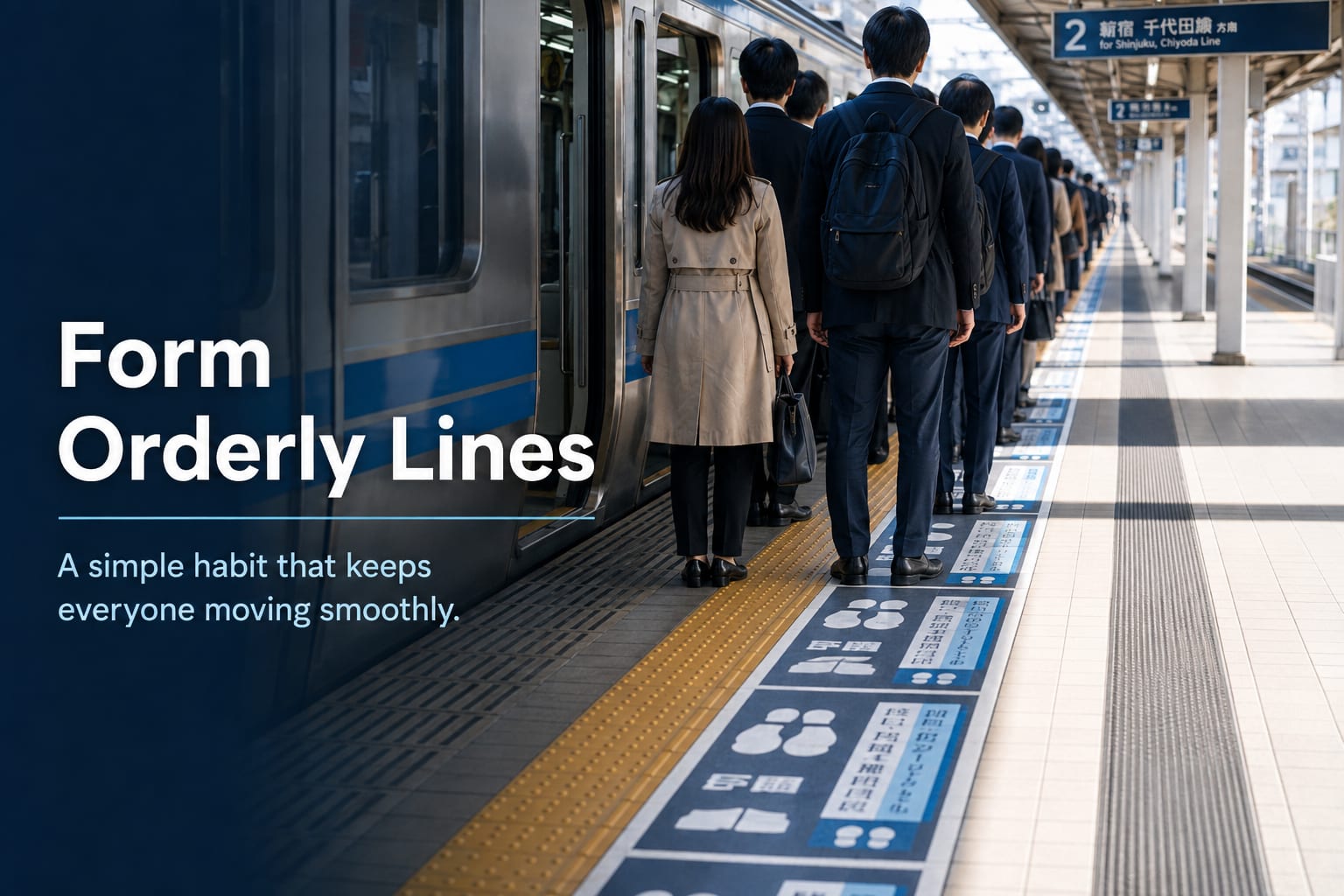
You will see queues in many places during a trip to Japan: on station platforms, at convenience-store registers, outside popular restaurants, at bus stops, and at event venues.
On train platforms, markings on the floor often show where each line should form. When a train arrives, people wait for passengers to get off before they board. This is less about following a complicated ritual and more about a simple rule: the people who arrived first go first.
If you see what looks like a queue, find the end before joining it. At a station, stand on the marked line and leave space for people to get off the train.
4. Tipping is generally not expected
This can be one of the most confusing differences for visitors from countries with a strong tipping culture.
In Japan, you generally do not need to leave a tip at a restaurant, cafe, hotel, or in a taxi. This remains true even when the service is excellent. The listed price is normally understood to cover the service you received.
There are limited situations involving a special gratuity, known as kokorozuke, but most travelers will not need to think about them during an ordinary trip. If you appreciated the service, a simple “arigato gozaimasu” (thank you) is enough.
For travelers accustomed to calculating a tip after every meal or taxi ride, this is one part of Japan that is refreshingly straightforward.
5. People carry their trash when bins are scarce
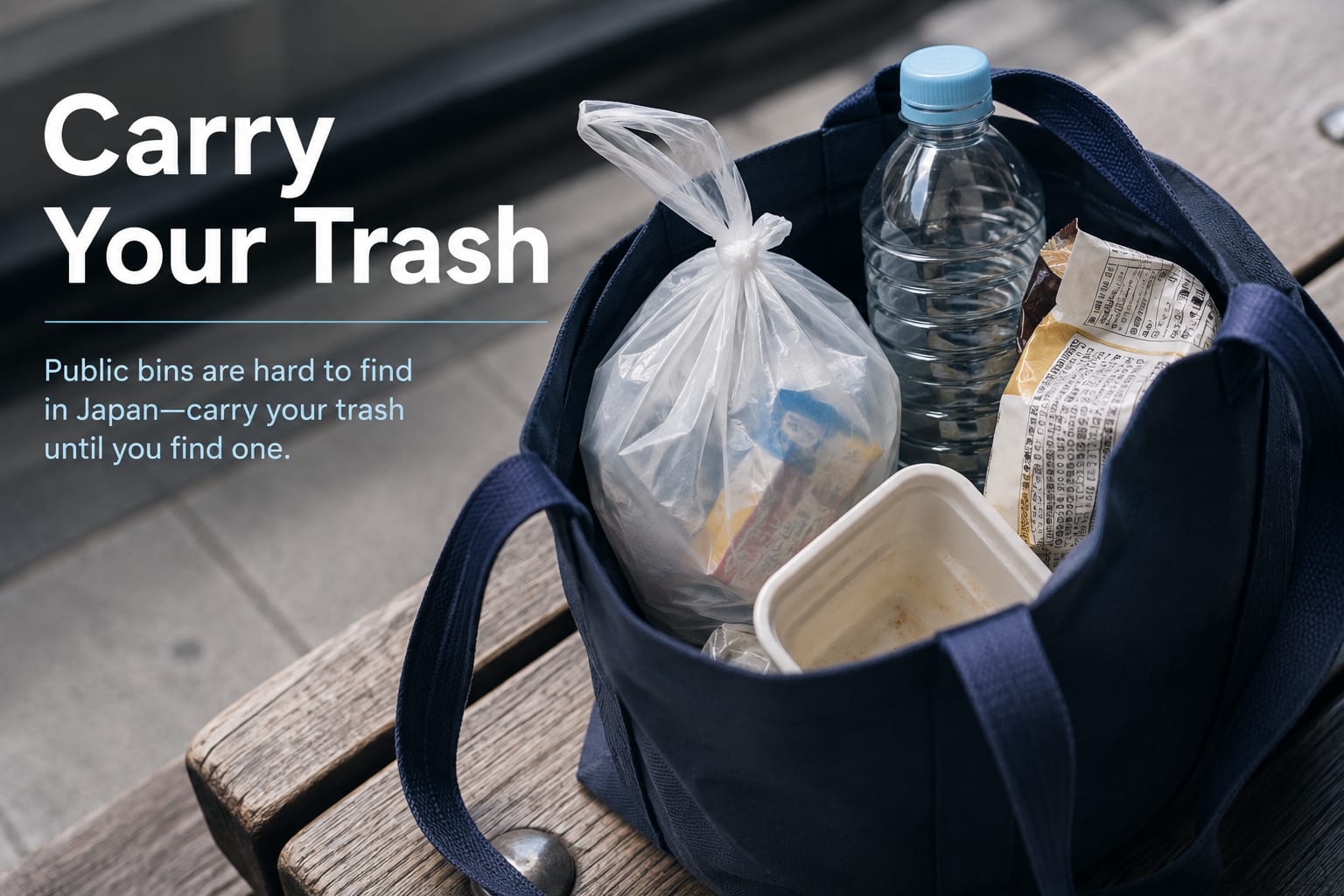
One question visitors often ask is, “Why are the streets so clean when there are so few trash cans?”
Public trash cans can indeed be difficult to find in Japan. When there is no bin nearby, many people put their trash in a bag and carry it until they find an appropriate place to dispose of it. JNTO gives the same practical advice to visitors.
You may find recycling boxes for bottles and cans beside vending machines. Stations and shopping facilities sometimes have bins too, although availability varies. Use them only for the type of waste shown on the label.
6. People say “itadakimasu” and “gochisosama” around a meal
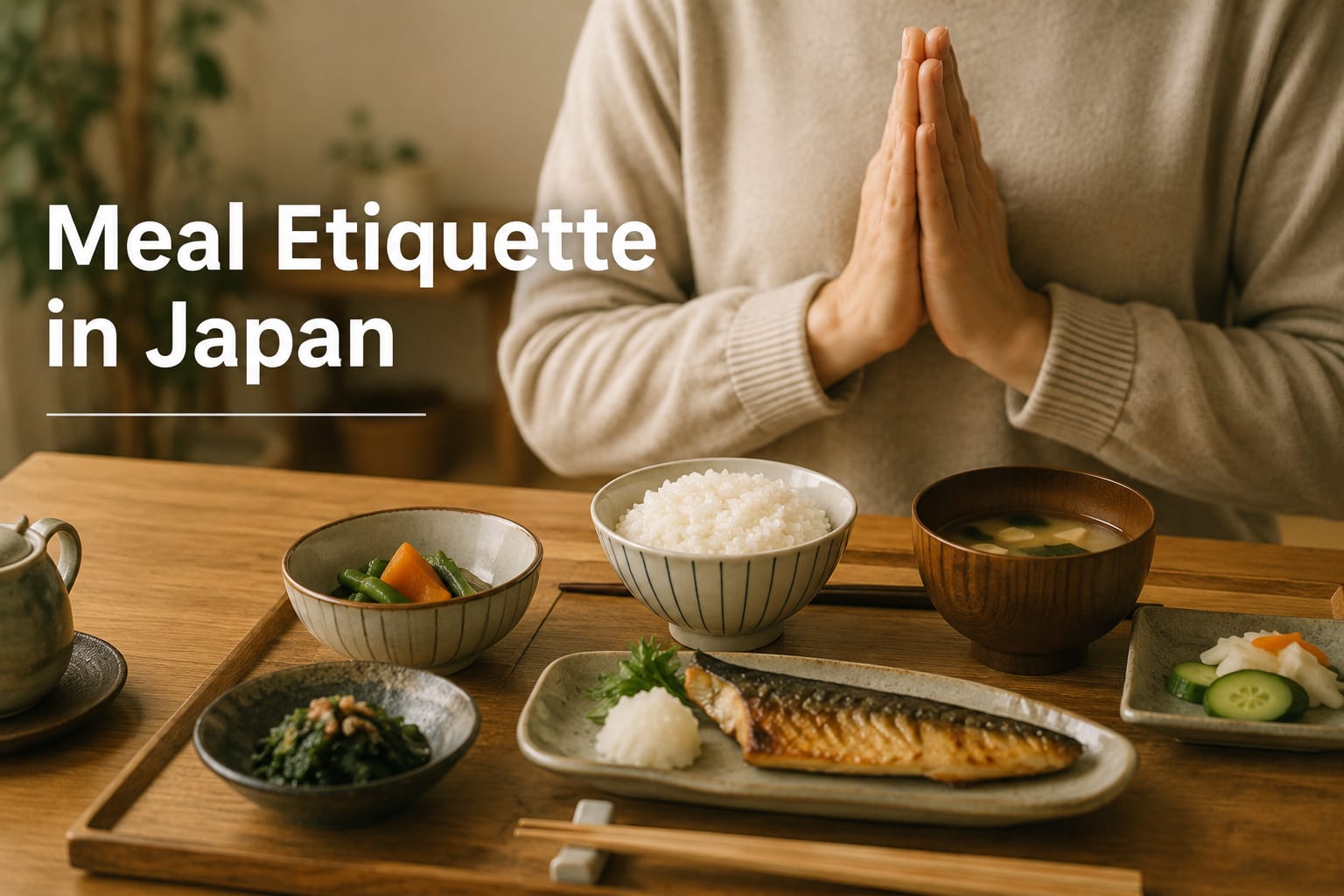
Before eating, many people in Japan say:
Itadakimasu (いただきます).
After finishing, they may say:
Gochisosama deshita (ごちそうさまでした).
Itadakimasu may look similar to “let’s eat,” but the meanings do not match exactly. The expression can carry gratitude for the food, its ingredients, and the people who prepared it. Gochisosama deshita expresses appreciation after the meal.
You will hear these phrases at home and in settings such as school lunches. They are not compulsory phrases that every international visitor must use in a restaurant. Still, saying “gochisosama deshita” as you leave is a natural way to tell the staff that you enjoyed the meal and appreciate their work.
They are useful words to remember if you want to experience a small part of everyday Japanese food culture.
7. People wash before entering the bath
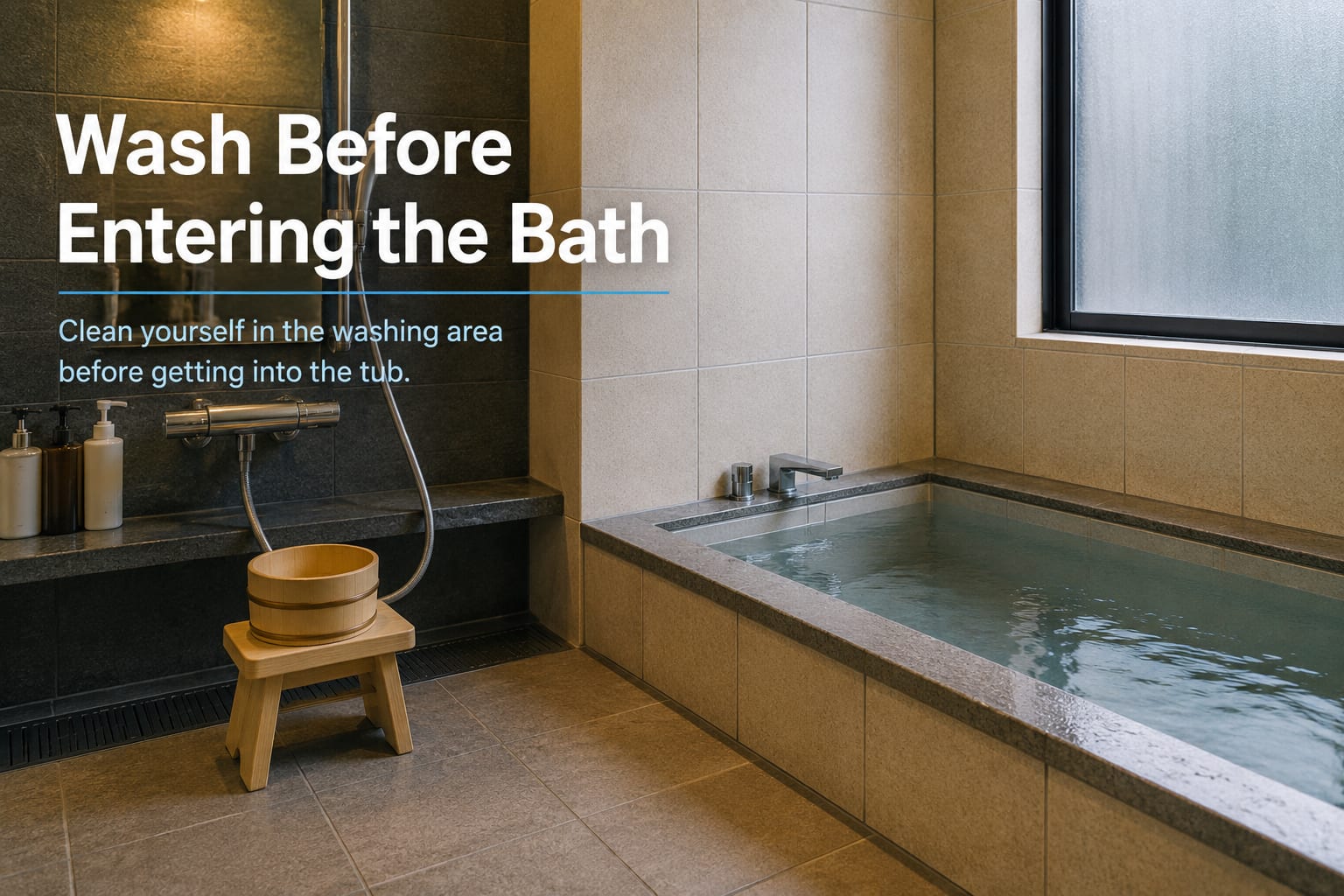
The role of the bathtub is one of the biggest differences between Japanese bathing and bathing in many other countries.
In Japan, you normally wash your body outside the tub and enter it only after you have rinsed off the soap. The spaces have different purposes:
- Shower and washing area: where you clean your body
- Bathtub: where you warm up and relax
This matters at home, but it is especially important at an onsen or sento, where many people share the same bathwater. Wash thoroughly at the shower station, rinse off all soap, and only then enter the bath.
Keep your small towel and your hair out of the water too. JNTO lists washing before entering and keeping towels and hair out of the bath as basic onsen etiquette.
The rules can seem like a lot on your first visit. The simplest way to understand them is to remember that everyone is helping to keep the shared water clean.
8. Students clean their own schools
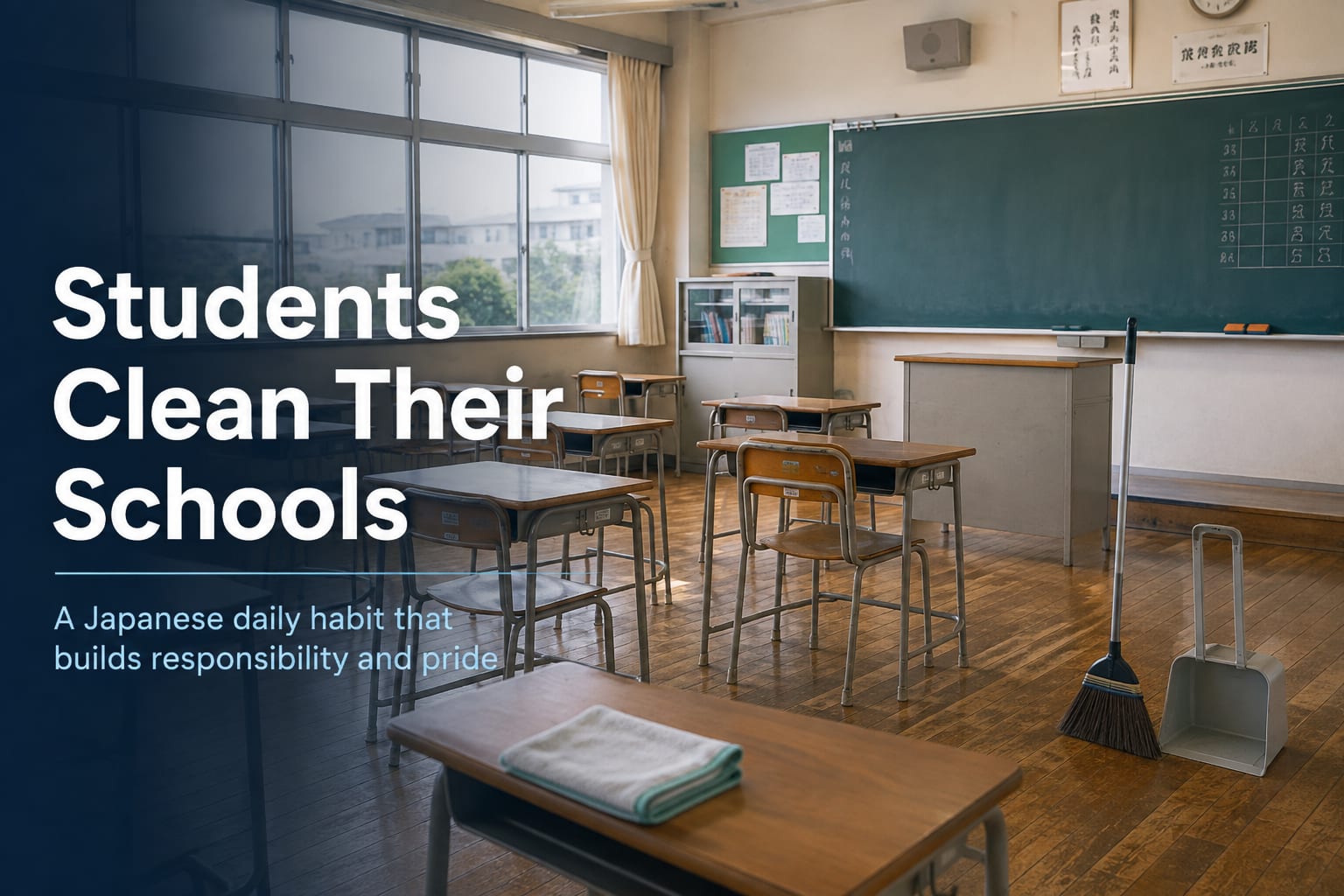
One part of Japanese school life that many people overseas find particularly interesting is cleaning time.
At many schools in Japan, students help clean classrooms, corridors, and other shared spaces. The Ministry of Education, Culture, Sports, Science and Technology describes cleaning as a cooperative activity included in school life.
I took part in school cleaning from elementary school through high school. We usually did not use machines like vacuum cleaners. Students divided the work, sweeping with brooms, wiping floors with cloths, and moving desks.
Japanese schools are not seen only as places for academic study. They are also places where children learn how to live and work with a group. Cleaning is therefore experienced as part of school life, not simply as a way to avoid hiring professional cleaners.
The method and frequency vary by school. Even so, the idea of caring for a place you use yourself is a useful window into everyday school culture in Japan.
You do not need to memorize every custom
After reading this list, you may feel that a trip to Japan comes with too many rules to remember. It does not.
JNTO’s guidance for visitors makes the same point: these customs are not difficult to follow, and observing the people around you is often enough. Personally, I do not think travelers need to behave exactly like someone who has lived in Japan all their life.
When you are unsure:
- Watch what the people around you are doing
- Check signs and floor markings
- Ask a member of staff
- Try not to cause a major inconvenience to other people
That is enough in most situations.
Customs can look like strange rules when you first encounter them. Once you understand some of the background, it becomes easier to see why people behave the way they do.
A different way to notice Japan
These eight habits are ordinary in Japan but can feel surprising to a first-time visitor:
- Taking off shoes before entering a home
- Keeping quiet on trains
- Forming orderly lines
- Not tipping in most situations
- Carrying trash when bins are scarce
- Saying “itadakimasu” and “gochisosama” around a meal
- Washing before entering the bath
- Students cleaning their own schools
Some are so familiar to people who live here that we do not think of them as special at all.
During your trip, look beyond famous sights and Japanese food and pay attention to these ordinary moments: a line forming on a station platform, shoes arranged in an entrance, a quiet train, or a customer saying “gochisosama” as they leave a restaurant.
Small scenes like these reveal a great deal about daily life in Japan. Knowing a little about them before you arrive may help you see a different side of the country.
Sources5 checked
- JNTO, "FAQ: Rules and Manners"Checked 2026-08-12
- JNTO, "Japanese Manners Do’s and Don’ts"Checked 2026-08-12
- JNTO, "Tipping in Japan"Checked 2026-08-12
- JNTO, "How to Best Enjoy Japan’s Onsen"Checked 2026-08-12
- MEXT, "Education in Japan: Strengths and Perspectives"Checked 2026-08-12